Desmond and Ron are thick as thieves, stealing into Maida Vale at night with Maddalena to create an impressively subtle soundtrack. Precise dates are hard to come by regarding this, but it seems that at around the same time that the Giants of Steam was being created Ron Grainer had another commission which required the…
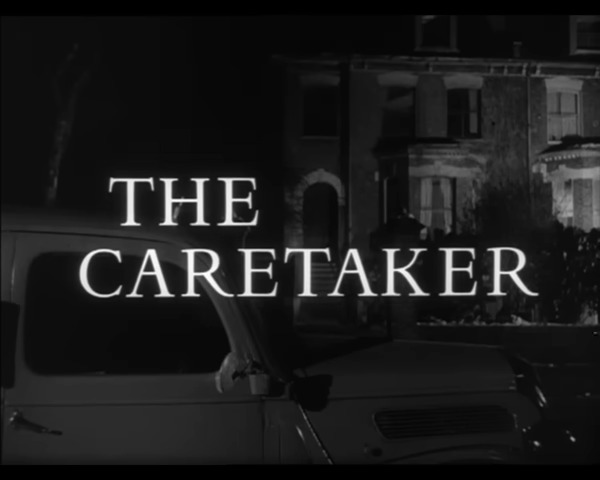
Harold Pinter sealed his reputation as a playwright with The Caretaker in 1960. After a long run in London, it made the transition to Broadway in 1961, directed by Workshop godfather Donald McWhinnie. In 1962 McWhinnie was nominated for a Tony Award for this production, so it’s fair to say that his former colleague Desmond Briscoe would have had more than a passing familiarity with this play. Despite the high regard for the staging, starring no less a trio than Alan Bates, Donald Pleasance and Robert Shaw, Pinter’s screenplay struggled to get financial support. A film adaptation of the ‘comedy of menace’ classic was not considered commercially viable. Nevertheless, the film was made, with support from such luminaries as Peter Sellars and Elizabeth Taylor. A partnership of the three actors, Pinter, producer Michael Birkett and director Richard Donner formed Caretaker Productions to make it, with no payment to themselves.
Maddalena Fagandini – Jo Hutton interview taken from Electronic Sound 93.
- The producer Michael Birkett wanted this different music.
The Caretaker was filmed across the winter of 1962/63 and wrapped filming on 11th January 1963. According to the director, Clive Donner, the soundtrack was only conceived and agreed upon after this date1. He explains that “there were all kinds of suggestions made” to them2 but that, in his view, any kind of music “would totally cut across” the realism of the film.
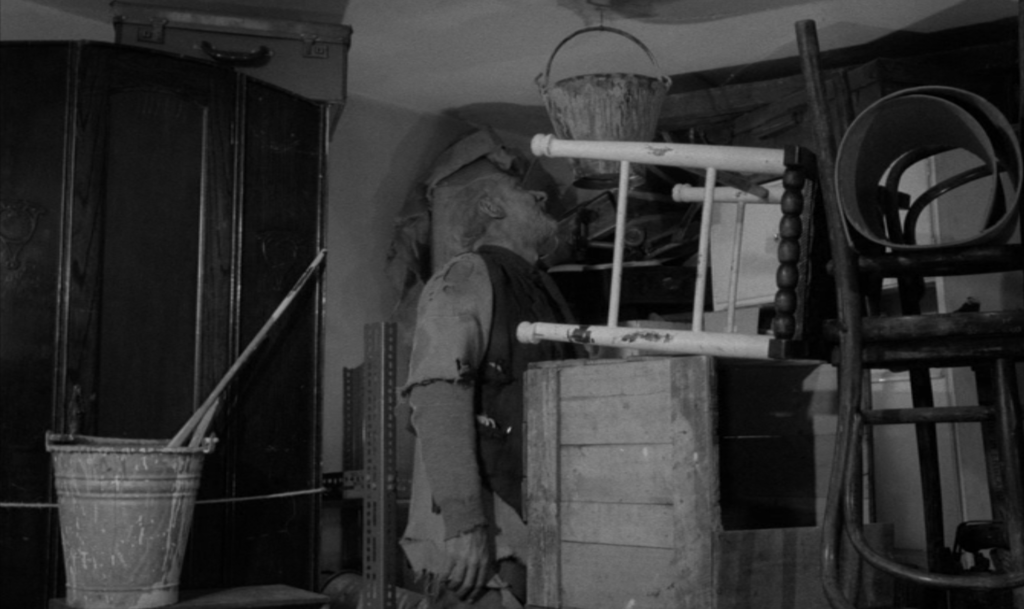
Here Donner claims ownership of the idea of doing away with “regular music”. Instead he says the concept developed to 3“orchestrate, dramatically, with sounds, certain moments in the film”. So, sound effects but more “take all these sounds that happen naturalistically in the film” and “treat them electronically” and “build up a series of sounds which can be used dramatically to heighten various instances”. This is not a new idea of course. It’s exactly what Daphne Oram, Desmond Briscoe and others did with radio drama in the late fifties giving the Radiophonic Workshop its seminal works. Donner goes on to detail how the three characters would be given “entirely different rhythmic” motifs and how they would interact with each other. This sophisticated and subtle technique is illustrated with a clip of Davies poking around the attic with the other characters’ presence felt through these sounds.
This detailed description of how the soundtrack came to fruition seems more likely to have been worked out as they went rather than fully worked out in advance. A desire for electronics could have led directly to Desmond Briscoe’s office, but Birkett and Donner turned to their friend Ron Grainer first. They had all worked on rock and roll flick ‘Some People’ in 19624 and perhaps it was through discussion with Grainer that the ideas laid out above were first developed. As Birkett tells it, they “persuaded him…not to have him write music but to score the effects we had in the film” and “have them somehow treated”.
The talented composer’s interest in electronic sound has perhaps been misunderstood due to his reported surprise at hearing Doctor Who for the first time. He was driven to get the most eclectic sound palette possible into his work. This meant encompassing early5 and world music sources, in addition to the latest instruments and styles. As soon as 1960 he expressed his interest in obtaining an Ondes Martenot and his score for ‘Station Six Sahara’ (1963) features the Clavioline, another early electronic keyboard, from France6. Nevertheless, the nuts and bolts of such an undertaking were daunting for the amateur tape splicer. He needed help and somehow or other he ended up with the services of a veteran of the art of special sound.
Speaking on the DVD commentary Birkett says that “Ronnie” had a “friend” at the Workshop7. I will assume this friend was Desmond Briscoe because Grainer and Birkett were sneaked into Maida Vale to work on the score and I believe only he could have done that. Moreover, Birkett refers to the friend as “he”, not “she”, which would have suggested it was Maddalena Fagadini.
Yes, well that was a secret. I wasn’t supposed to.. we had to work in the evenings.
Maddalena Fagandini – Jo Hutton interview taken from Electronic Sound 93.
Birkett paints a picture in the DVD commentary of sneaking into the studios “…our friend thought it was dead silly that we shouldn’t be allowed to use it, so he left a window open for us at night. And at the end of the day, Ronnie Grainer and I would get in through the window of the BBC Radiophonic Workshop”. He makes it clear that the Workshop was not for hire, but it was the only place with the right equipment.
Maddalena Fagadini was given no credit on The Caretaker, or in the reminiscences above, but it was her, working the machines. The accomplished Radiophonic Workshop composer would have been the perfect choice for such a challenging and rather prestigious work – even if the plaudits would be kept amongst those who knew. The “rhythmic” motif element of this would have been right up her street too.
The raw materials were the natural sounds recorded in the film. Richard Donner takes up the story again in the commentary and says of the noises that: “…they were pushed into another place …there was a memory that you might hear of the dripping of the water” for example. And “it would be treated in such a way that it had other elements in it that gave it a mysteriousness which added to the mysteriousness of everything else going on”.
The score is more rhythmic than tonal and it immediately brings to mind the woody knockings of Fagindini’s Interval Signal. In the first scene, where the old man, Mac, follows Aston home the tension is already mounting and the creepiness – which TV viewers had complained about8 – found a better setting. During the making up of Mac’s bed, disparate chimes accompany their activities. These sounds pitch up to plinking as morning breaks. As Aston leaves for his morning constitutional a difficult-to-place electronic descending effect. Mac’s exploration of the attic comes with the ghostly clanging of drips into a bucket. When Mick surprises Mac, a high scraping noise cuts in, which follows Aston to a shop with a creaking door. And the drips in the bucket have switched to a silly little plop. In general, Grainer’s soundtrack appears in the gaps between scenes or breaks in the dialogue. A more spare and minimal score it’s hard to imagine.
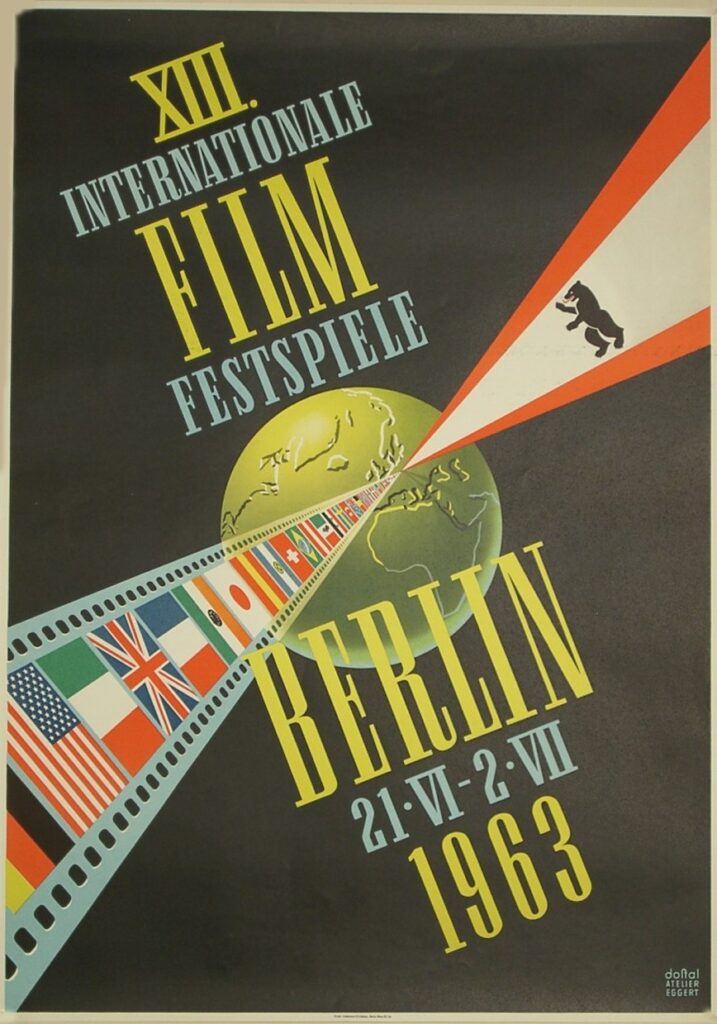
The Caretaker was filmed across the winter of 1962/63 and was at the Berlin Film Festival in June 1963. I surmise that Grainer would have been busy editing the soundtrack in the spring of that year. Recall that Giants of Steam was broadcast in May of 1963 and we have two Grainer-RWS projects seemingly in production simultaneously. So, which came first? Apparently, it was Briscoe’s call to Grainer which put them together for GoS, so maybe Ron then asked for help with the film after that. Or, was it McWhinnie who put the Aussie composer in touch with his old friend Des and that was how Briscoe already had Ron’s number? In either case – or any other set of circumstances – Ron Grainer had a very good working relationship with the RWS by the summer of 1963 when Verity Lambert came calling.
Meanwhile, this moonlighting by Maddalena was perhaps her final work at Maida Vale. The last new work in 1963 was a radio play called Bitter Waters9 logged on 18th January. If this was her final regular job and the story above is correct then she was probably stealing back into room 13 with her co-conspirators as an ex-member of the workshop.
- That nugget and subsequent quotes, come from an interview Donner did with the University of London TV station included with the BFI’s DVD extras. Interestingly, perhaps, here Donner claims ownership of the idea for a score made up from the sound effects.In the DVD commentary to The Caretaker (circa 2002) the producer Michael Birkett takes up the story of the score and claims that it was all his brilliant idea. Not that he was sure it would work, of course, but he was very relieved that it did! This runs counter to Donner’s account from thirty years earlier and just ten years after the event. ↩︎
- Suggestions included only Beethoven trios, which would be appropriate to the three characters ↩︎
- Birkett refutes this and on BFI’s DVD commentary saying that the concept for the soundtrack was “a good deal my fault”. There is a frisson of disagreement from Donner in the air, but it is not explored. The commentary was recorded thirty years after Donner’s interview and forty years after the events so decide for yourselves who actually deserves any credit here. ↩︎
- Whether the fact that Grainer had worked as a caretaker in a block of last in the 50s had any bearing on this is mere whimsy. ↩︎
- A foreshadow of what David Cain would get up to at the Workshop later in the decade ↩︎
- Details of Grainer’s musical eclecticism from various sources including :
https://rongrainertheeuropeanyears.blogspot.com/p/1964_26.html?m=1
Pragmatism and In – betweenery: Light music in the practice of Australian composers in the postwar period, c.1945-1980
https://www.portrait.gov.au ↩︎ - Note that this sets a post hoc date – January 1963 – for when Des and Grainer had become pals. ↩︎
- Letters to the Radio Times about the discomfiting aspect of some of the Workshop’s output as it became more common at the end of 1960 were not uncommon. ↩︎
- https://genome.ch.bbc.co.uk/ad33b428a94058395e32366e3c525a4d ↩︎
Leave a Reply